
1. Introduction
For many small business owners, the “feast or famine” cycle is a constant source of stress. One month the sales pipeline is overflowing, and the next, it’s bone dry. The solution to this instability isn’t working harder it’s working smarter with consistent lead generation strategies for small business.
Lead generation is the lifeblood of any scalable operation. Whether you are navigating the complex world of affiliate marketing, managing niche e-commerce brands, or offering professional services, you need a predictable way to turn strangers into interested prospects. In this guide, we will break down the foundational tactics, tools, and mindsets required to build a lead machine that works around the clock, allowing you to focus on what you do best: serving your customers.
2. What Are Lead Generation Strategies for Small Business?
At its core, lead generation is the process of attracting and converting strangers into someone who has indicated an interest in your company’s product or service. For a small business, “lead generation strategies for small business” refers to the specific, cost-effective methods used to capture contact information usually an email address or phone number so you can nurture that relationship over time.
Think of it as a digital handshake. A visitor lands on your website; instead of leaving immediately, they see a reason to share their contact details. Once you have that connection, you move them from a “cold” visitor to a “warm” lead, eventually guiding them toward a purchase.

3. Why It Is Important
Relying solely on word-of-mouth or sporadic social media posts is risky. Implementing formal lead generation strategies offers several structural advantages:
- Predictable Revenue: When you control your lead flow, you can forecast your monthly income with greater accuracy.
- Asset Building: Your email list is an asset you own. Unlike social media followers, which can be wiped out by algorithm changes, your database remains yours.
- Cost Efficiency: Targeted lead generation is often cheaper than broad-spectrum advertising because it focuses your budget on people already interested in your niche.
- Relationship Depth: It allows for “nurturing.” By providing value through email or content, you build trust, making the final sale a natural progression rather than a hard pitch.
4. Key Concepts: The Lead Lifecycle
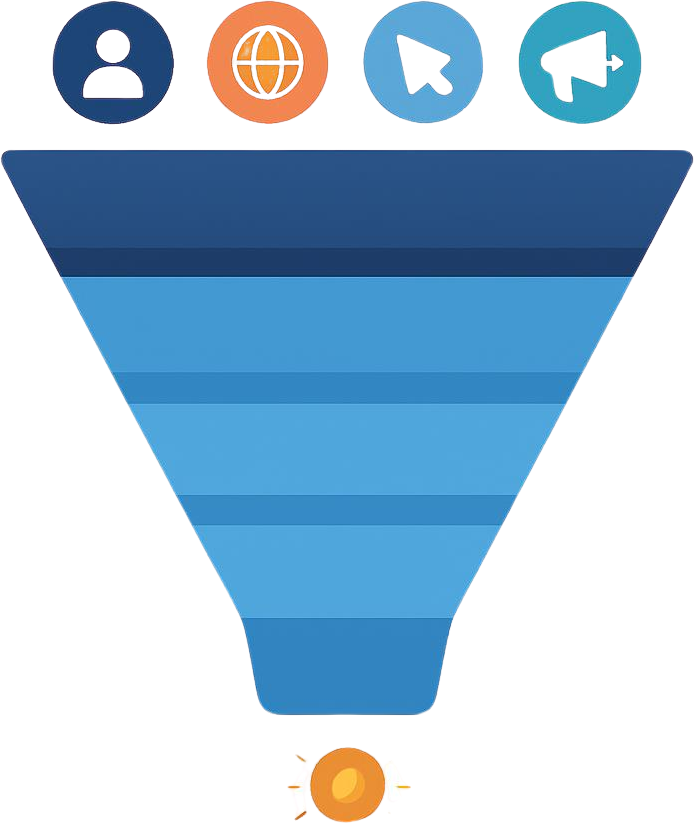
To succeed, you must understand how a lead matures. We categorize them into three stages:
The Top of the Funnel (TOFU): Awareness
At this stage, users are looking for answers to problems. They aren’t ready to buy; they are researching. Your goal here is to provide helpful, high-quality content like blog posts or educational videos that establishes your authority.
The Middle of the Funnel (MOFU): Interest & Evaluation
The lead knows who you are and has shared their contact information (usually in exchange for a “lead magnet”). Now, you must nurture them with case studies, newsletters, or webinars that show why your specific solution is the best fit.
The Bottom of the Funnel (BOFU): Conversion
The lead is ready to act. Here, you provide direct incentives: a limited-time discount, a free consultation, or a product demo.
Lead generation is ultimately about building a direct relationship with your audience; for a detailed walkthrough on how to start, check out our guide on how to build an email list from scratch.
5. Proven Lead Generation Strategies for Small Business
Not all tactics work for every industry. The key is to select a mix of inbound and outbound methods that suit your resources.
Content Marketing & SEO
High-quality content is the most sustainable way to generate leads. By optimizing your website for search engines, you attract users actively seeking your expertise. Focus on “long-tail keywords” specific phrases that signal high intent, such as “best organic fertilizer for indoor plants” rather than just “gardening.”
Email Marketing Automation
Once you capture a lead, you must keep the conversation going. Use automated “welcome sequences” to deliver the value you promised, introduce your brand story, and gradually present your offers. Consistent email communication ensures you stay “top of mind” when the lead is ready to buy.
Strategic Lead Magnets
A lead magnet is a free incentive offered in exchange for contact info. For small businesses, these work best when they solve a specific, “painful” problem quickly. Examples include:
- Checklists or templates (e.g., “10-Step Website Audit Checklist”)
- Exclusive industry reports or whitepapers
- Mini-email courses
- Discount codes for first-time buyers
Social Media Community Building
Don’t just post links; engage. Join groups where your target audience hangs out. Answer questions genuinely without pitching. Over time, your helpfulness will drive profile clicks and organic leads.
6. Best Tools to Scale Your Efforts
You don’t need an enterprise budget to generate leads effectively. These tools are industry standards for small businesses:
- Email Marketing: ConvertKit or Mailchimp are excellent for managing automated sequences and segmenting your audience.
- Landing Pages: Carrd (for simplicity) or Elementor (for WordPress users) allow you to create high-converting pages without coding.
- Lead Capture: OptinMonster helps you trigger pop-ups or slide-ins only when a user is likely to leave your site.
- Organization: A simple CRM like HubSpot (free tier) keeps track of your lead interactions so you never miss a follow-up.
Managing lead data and automating your follow-up sequences can be time-consuming for small teams. Many business owners find that using a dedicated platform like Lead Hero helps them streamline these workflows, allowing them to capture leads and nurture them on autopilot without needing advanced technical skills.
7. Common Mistakes to Avoid
Even with great tools, many businesses fail due to these common pitfalls:
- Buying Email Lists: This is the fastest way to damage your sender reputation and end up in the spam folder. Always grow your list organically.
- Over-Complicating the Opt-in: Keep your lead capture forms short. Asking for a name and email is usually sufficient; adding extra fields like phone numbers or job titles reduces conversion rates significantly.
- Ignoring Follow-up: A lead is a conversation, not a transaction. If you don’t follow up within the first 24–48 hours, interest fades rapidly.
- Lack of Clear CTA: Every piece of content you create whether it’s an Instagram post or a blog article should have one clear “Call to Action.”

8. Best Practices for Long-Term Success
- Consistency over Intensity: It is better to publish one high-quality article a week than five mediocre ones.
- A/B Testing: Test different headlines on your landing pages. Even a 5% increase in conversion rate can equate to hundreds of extra leads annually.
- Segment Your List: Don’t send the same email to everyone. Separate subscribers based on their interests or purchase history so your messaging remains relevant.
- Focus on Retention: It is five times cheaper to retain an existing customer than to acquire a new one. Treat your lead generation as the start of a long-term partnership.
9. Conclusion
Implementing effective lead generation strategies for small business is not an overnight task, but it is the most reliable way to achieve business independence. By focusing on providing genuine value, leveraging automated tools to handle the heavy lifting, and maintaining a consistent presence where your audience lives, you move away from the stress of chasing sales and toward a model of attracting them.
Start small: pick one lead magnet, one traffic source, and one email sequence. Once that flow is working, refine it, then scale. Your future growth depends on the foundation you build today.
FAQ Section
Q1: How many leads should a small business expect to generate?
A: There is no universal number, as it depends on your industry and traffic volume. Focus on “conversion rate” instead aim for 2%–5% of your website visitors becoming leads as a healthy starting benchmark.
Q2: Do I need a website to generate leads?
A: While highly recommended, you can generate leads on social media using platforms like Facebook Lead Ads or by using simple “Link in Bio” landing pages like Linktree or Carrd.
Q3: How often should I email my leads?
A: Consistency is key. A weekly newsletter is standard for most small businesses. The goal is to provide value, not just sales pitches, to keep your open rates high.
Q4: What is the most effective type of lead magnet? A: Simple, actionable content wins every time. Checklists, “how-to” guides, and templates usually outperform long e-books because they promise a quick “win” for the user.
Q5: Should I use paid ads or organic content for lead generation?
A: Start with organic content to validate what your audience wants. Once you have a high-converting landing page, use paid ads to scale traffic to that specific page.